April 2, 2025
The US’ first submissions in the WTO dispute DS 623 where China is challenging the IRA touch an important issue (see Simon Lester’s initial commentary here). The US argue that both Articles XX and XXI of the GATT may and do apply beyond the GATT and to other covered agreements on trade in goods, and specifically to the TRIMs and the ASCM.
It is incredible how things come and go. (By the way, I am increasingly persuaded that history operates in cycles and circles.)
The debate on the applicability of GATT XX to agreements other than the GATT was very lively 10-15 years ago, and made enlivened after the findings of the AB re the China’s Protocol which essentially adopted a specific, conservative hermeneutic approach. In order to give way to the application of the GATT it is necessary that the other agreement includes a specific textual link. Simply using the traditional interpretative tools of general-special law is not enough. The explicit language must mention the GATT
At that time, people in academic circles – including myself – were discussing about the big “nuclear” question, i.e. whether you could apply it to trade remedies or the ASCM.
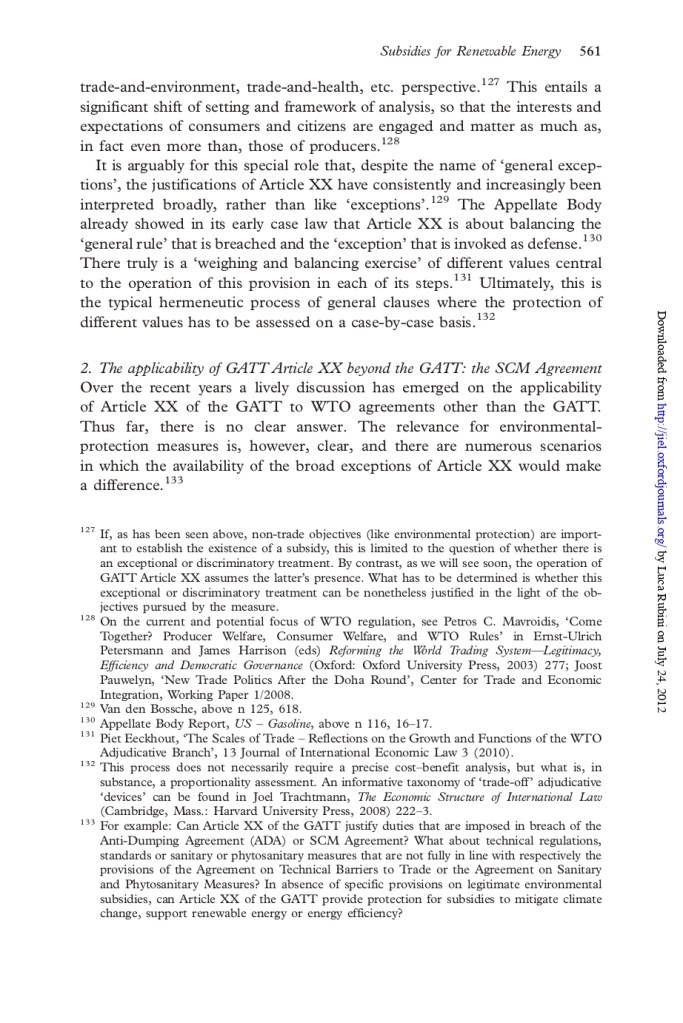
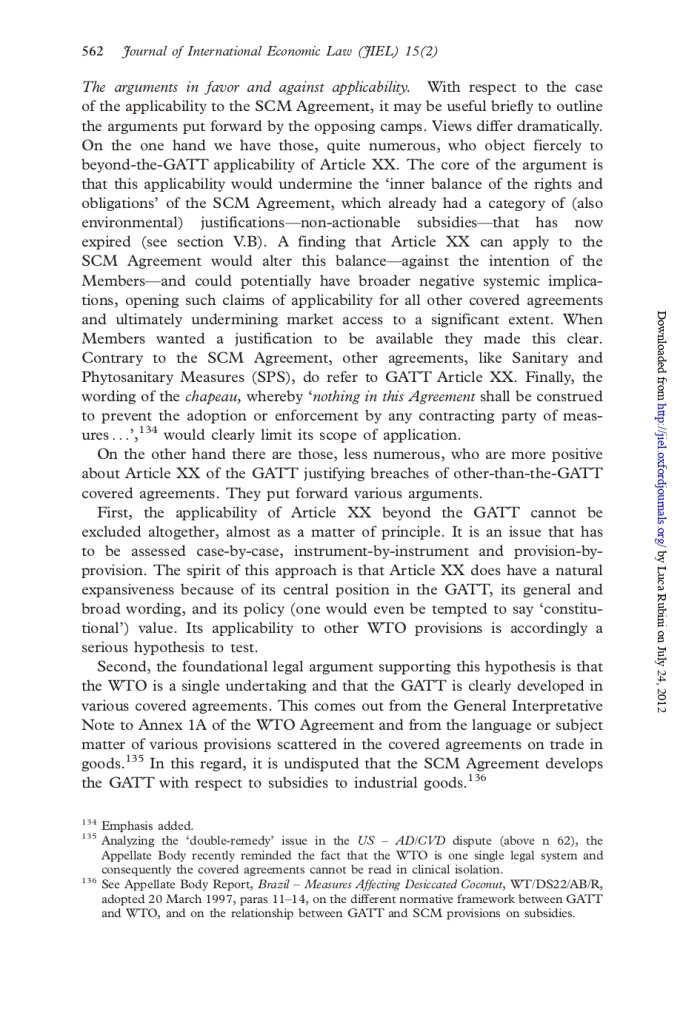
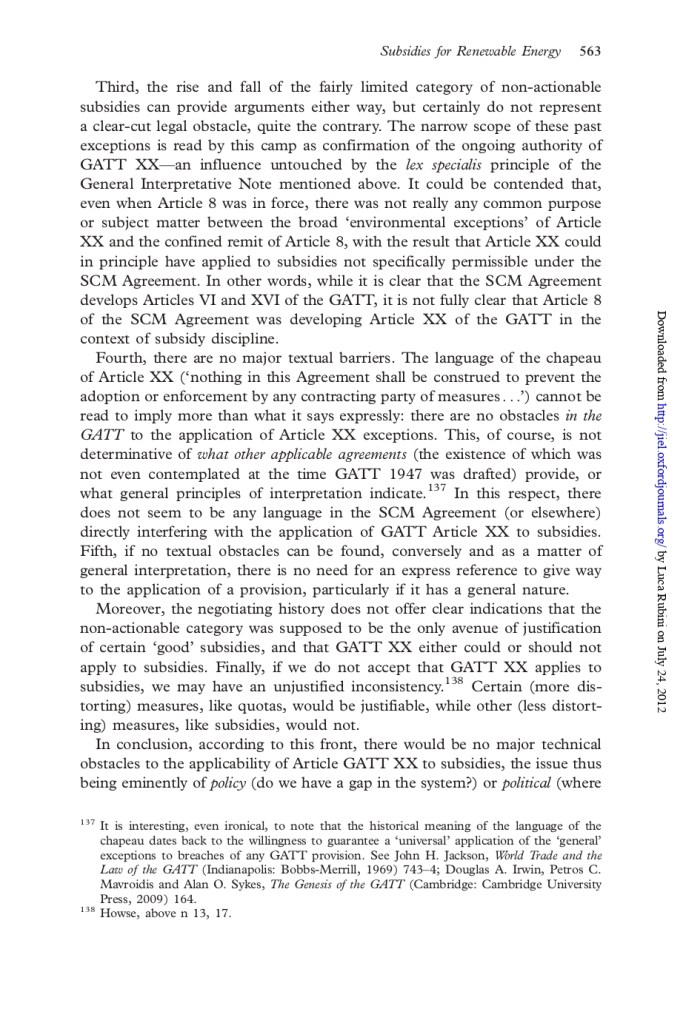
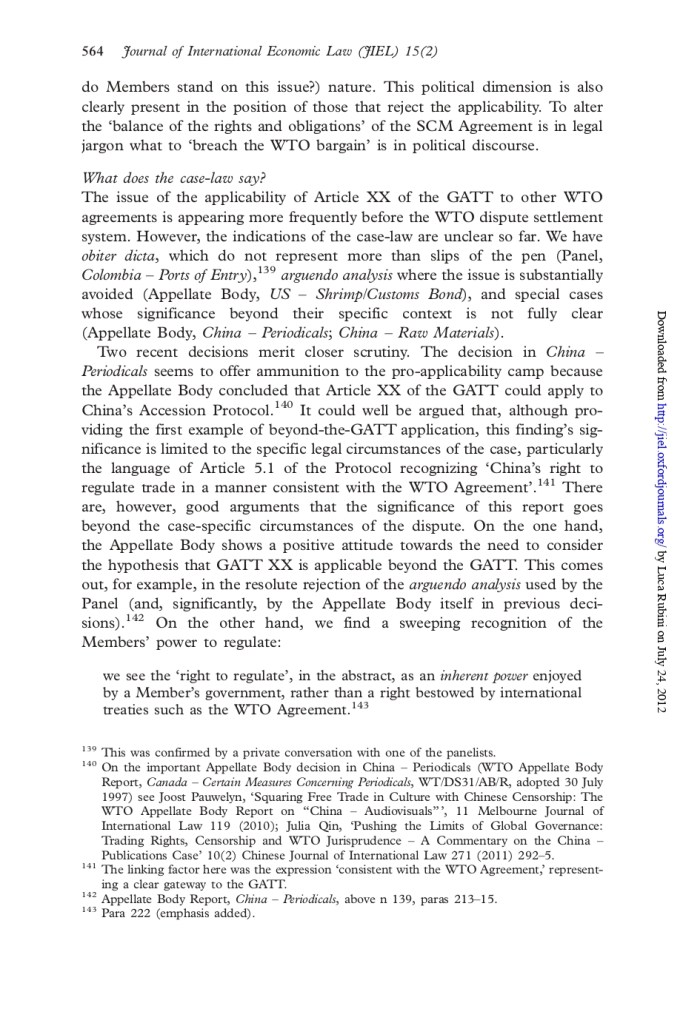
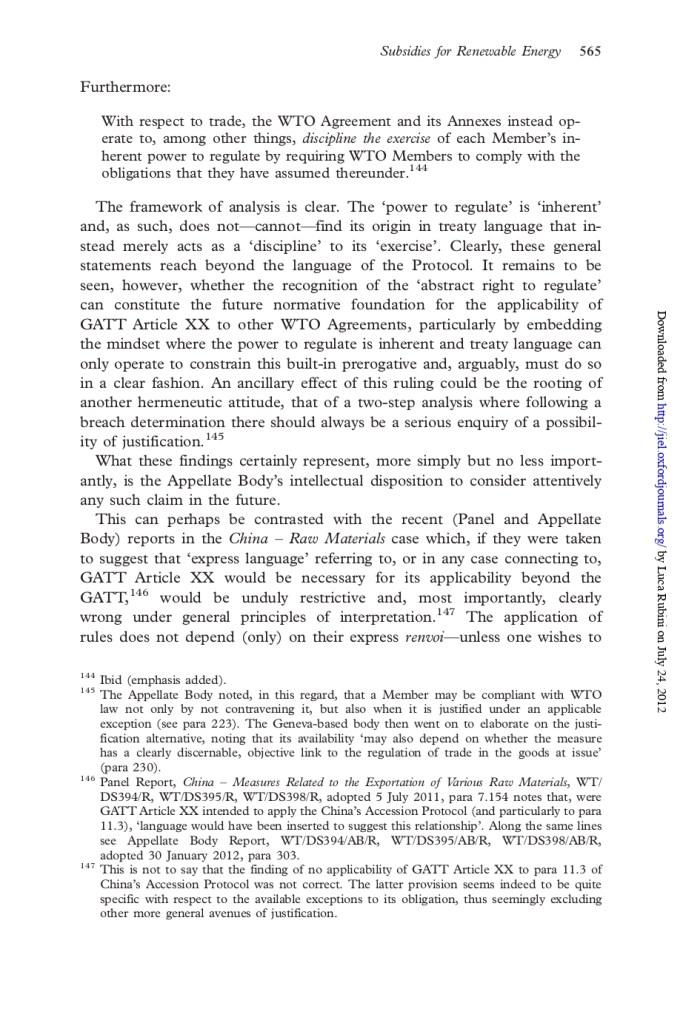
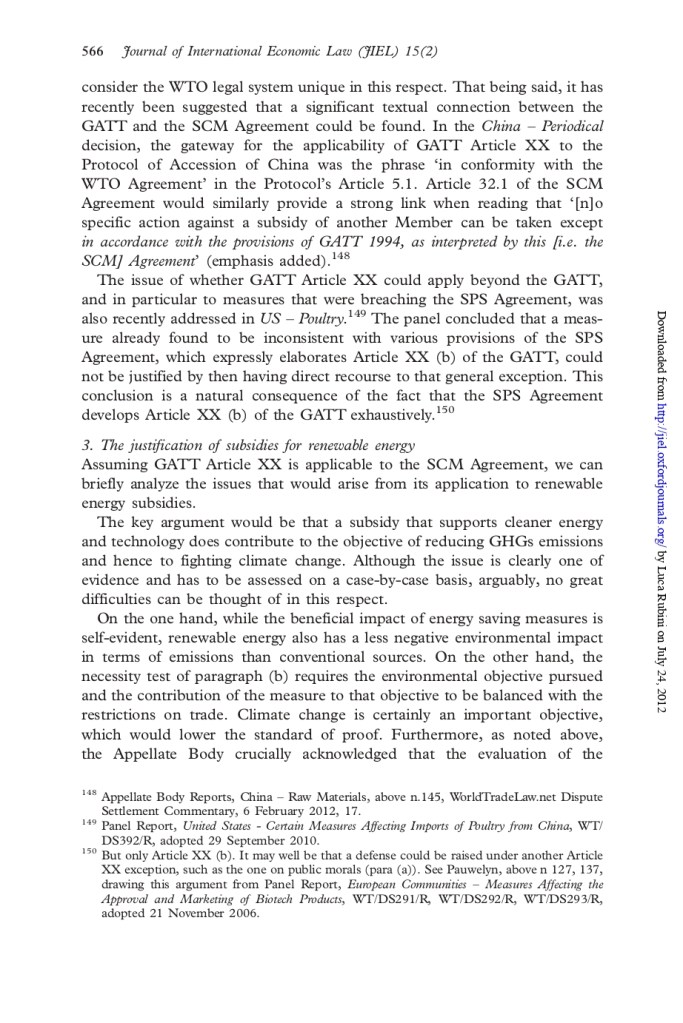
Beyond the technicalities, the issue is eminently political because in the end the legitimacy of using general exceptions in an innovative way may be subject to DS and subject the latter to undue pressure – which is not good. In a 2012 JIEL article (Ain’t Wastin’ Time No More) I provided a summary of the various arguments in favour and against the applicability of GATT XX to the ASCM, and offered my two cents on the broader systemic-political implications, should the DS have accepted this. (You can find, for your convenience, the key pages below. But read the full article to fully appreciate the context!)
At the time, to seriously suggest that GATT XX could save subsidies was a kind of legal and political taboo. Now, it is back and it is put forward by no other than the US!
Another sign of the times we live in. For better or for worse, we are forced to go back to the fundamentals of the system – which in itself may be a good thing. (This is what you are supposed to do in times of crisis: remember the etymology of this word, the Greek krinein, which means “to decide, distinguish, to make choices”).
It will be very interesting to read any other submission which is made publicly available (in the era of transparency we are still at the mercy of Member States …). And, of course, to see what the Panel will have to say (if they do not take the “judicial economy” alley …).
As my article’s title was suggesting, it is best for Member States to take the lead and reform the rules so that they can tackle the key challenges of contemporary times head-on (rather than giving the hot potato to dispute settlement). This is what occasionally happens in PTA practice which is increasingly the realm of regulatory innovation. The issue of the applicability of GATT Article XX may have been dormant at the multilateral level, but it was negotiated in PTA circles. Check our Article 12.9 of the EU – Japan PTA (Chapter on “Subsidies”).
ARTICLE 12.9
General exceptions
For the purposes of this Chapter, Article XX of GATT 1994 and Article XIV of GATS are hereby incorporated into and made part of this Agreement, mutatis mutandis.
Chapeau (not of GATT XX!) to the EU’s and Japan’s courage and ambition!
 lucaslaws